
The hotel industry took a massive blow during the COVID-19 pandemic, but the past two years have offered huge promise for the sector, with extended-stay accommodations spearheading the recovery. With 38.8% of Arizonians working remotely at the beginning of the pandemic – and 59% of Americans still teleworking in 2022 – it’s only logical that people want to travel more and visit different destinations as they go about their businesses. That’s why extended-stay hotels have shown strength in the past two years, by achieving the highest performance results of any segment during the pandemic.
This trend is projected to continue as the industry gradually returns to 2019 levels. Hence, hotel managers, investors, and industry leaders might want to create the best management structure to ensure they seize the opportunities going forward and provide the best guest experiences.
This article offers a deeper understanding of extended-stay hotels, the most profitable services and products you can offer your guests to achieve the maximum ROI, and the best practices to increase your revenue using extended-length stays.
When speaking of an extended-stay hotel, we are not referring to a reservation in a specific hotel chain, such as Extended Stay America. Instead, it refers to a particular type of hotel rental. An extended-stay hotel provides long-term accommodation to guests, complete with all the amenities guests require for comfort and convenience. The essence is to offer the types of perks that make them feel at home for several weeks or months even though they are away from home.
As many working-class Americans (construction workers, disaster relief workers, professionals in the energy and tech industries, traveling medical professionals, etc.) travel to various destinations for their career pursuits, they need to stay in specific locations for extended periods without needing to relocate or make a permanent move. Granted, long-term hotels and corporate housing options offer them excellent alternatives to traditional apartment rentals, Airbnbs, and vacation rentals by owners (VRBOs).
As a hotel operator, leveraging extended-length stays can offer a range of benefits, including:
As a long-term hotel manager, you need to make your establishment conducive and lucrative to extended-stay lodging seekers. Therefore, offer your guests more amenities than a regular hotel.
Very few hotels provide kitchenette or full-kitchen options, and the few offering these amenities often charge extra.

The chances are that your extended-stay accommodation caters to busy professionals, and offering housekeeping services (such as cleaning towels, changing linen, cleaning the bathrooms, etc.) can greatly incentivize them to consider booking a room at your property. It also differentiates your establishment from competitors and other non-rental hotels.
To maximize room occupancy (and profits), include the following amenities in your hotel roster:
Many accommodation establishments in Phoenix, AZ, and across the US offer a place like home. Examples of long-term hotels include:
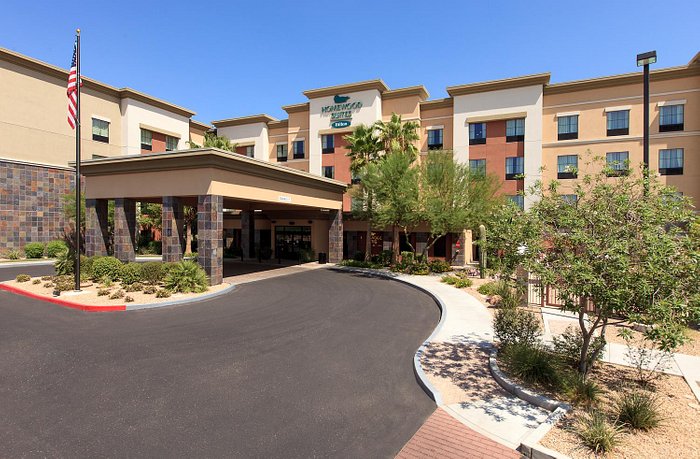
Like regular hotels, long-term hotels have varying prices, usually lower than those you’d find in traditional accommodation establishments. The costs of staying in a standard hotel can quickly add up, especially for avid business travelers. For instance, the average nightly rate of a business hotel in Phoenix, AZ, is $110, which totals $770 if you stay for a week.
Most of these hotels don’t offer discounted rates for extended stays because they operate based on a high guest turnover. Thus, they expect visitors to stay for several days and then check out. That can peg you back financially if you plan to stay in a location for weeks or even months.
That’s when your extended-stay hotel(s) comes into play. The costs for a month-long stay at a long-term hotel vary widely – based on factors such as location and the type of establishment. Still, travelers can expect to pay an average of $2,761, which means the daily and weekly rates fall at $92 and $690, respectively. Hence, your extended-stay hotel can offer significant cost-saving opportunities for travelers planning to stay longer in a destination.
A Revenue Management System (RMS) is a critical tool in the hospitality industry. It can help you streamline your revenue margins, regardless of the type or size of property you own. The primary reason for deploying this technology is its ability to quickly calculate complex problems and track market data in real-time. That’s virtually impossible when working manually.
You can leverage that data to develop an effective pricing strategy for your extended-stay guests. The software makes it easy to adjust prices across various distribution channels without logging in to each of these systems individually. As a result, you can easily track multiple key performance indicators (KPIs), such as revenue per available room (RevPAR). This enables you to attract guests searching for extended-stay hotels to improve your establishment’s bottom line.
An RMS is critical for both small and large properties. If you run a smaller hotel, it’s even more critical to maximize the revenue generated by each room. The technology is equally crucial if you manage a larger long-term hotel. The sheer number of rooms and workload related to managing revenue manually can be time-consuming and sometimes mulled by errors and inaccuracies.
At NewGen Advisory, we provide full-service commercial real estate brokerage services with a high focus on hospitality and lodging assets. With our team of seasoned industry specialists, you get unrivaled access to an extensive network of industry leaders, investors, and lenders to streamline your transaction. Contact us today to gather valuable information on how to implement hotel management structures for extended-stay hotels.