
The hotel sector is closing out in 2025 with a story of two markets—one defined by resilience at the luxury end and another constrained by sluggish growth in the midscale and economic tiers. This divergence, underscored by recent earnings results, cooling inflation, and evolving investor sentiment, is setting the stage for a transformative 2026.
Core prices rose only 0.2% in September, signaling an encouraging slowdown in inflation. Coupled with the market expectation for a 50-basis-point rate cut by year-end, the easing macro backdrop could provide a lifeline to brands burdened by cost inflation and financing constraints. Yet, while midscale players like Wyndham and Choice Hotels continue to feel pressure, luxury and upper-upscale operators such as Hilton, Marriott, and Hyatt are thriving—supported by strong balance sheets, scalable growth models, and investor confidence.
September’s inflation data reinforced what the hospitality industry had been hoping for—signs that inflation is cooling. The U.S. Bureau of Labor Statistics reported a slower rise in core prices, mainly due to easing shelter and transportation costs. These trends align with expectations that the Federal Reserve may shift toward a more accommodative policy stance, potentially cutting rates by 50 basis points before December ends.
The Dallas Fed’s analysis provides a deeper layer of context: goods costs remain the largest driver keeping inflation above the 2% target. Their findings show that excess inflation contributions from core goods still hover near 0.3%, while non-housing services and housing inflation have moderated.
For the hotel sector, lower rates could open the door for refinancing, spur new construction, and attract sidelined capital. Developers facing higher borrowing costs from 2023 may soon find renewed flexibility—a factor that could help rebalance the playing field between large asset-light brands and smaller, capital-constrained operators.
The earnings season revealed a widening divide in performance across hotel chains. Luxury and upper-upscale players are managing to grow in a challenging environment, while midscale and economic brands are struggling to maintain momentum.
Hilton’s third-quarter update offered a reassuring narrative for investors. Despite a modest 1.1% RevPAR decline, the company outperformed in earnings thanks to disciplined cost control and stronger-than-expected licensing fees. More importantly, Hilton achieved 6.5% net unit growth, surpassing expectations and cementing its leadership among global hospitality companies.
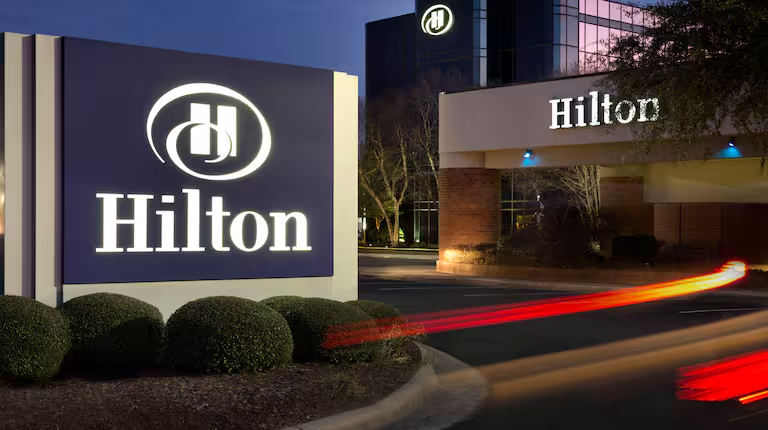
Management remains optimistic heading into 2026, projecting stable U.S. RevPAR and a strong pipeline fueled by international conversions. Hilton’s asset-light strategy and ability to deploy key money give it flexibility that smaller brands simply can’t match. Investors have rewarded that consistency—Hilton’s stock has surged 12.9% year-over-year, a stark contrast to declines across the broader midscale category.
Marriott’s outlook is slightly more cautious, but sentiment remains constructive. Investors are primarily focused on the company’s ability to improve its organic net unit growth and normalize its growth algorithm in 2026. Recent acquisitions and the integration of MGM and residential branding deals have introduced some volatility, but analysts expect Marriott’s third-quarter results to remain within guidance.
While domestic RevPAR fell 1.5%, international business has held strong—a recurring theme among top-tier operators. In a recent investor survey, 33% of respondents identified Marriott as a high-conviction long idea, reflecting faith in the brand’s global reach and operational consistency.
If Hilton represents consistency and Marriott stability, Hyatt symbolizes transformation. Despite a 4.9% stock decline over the past year, Hyatt’s shift toward an asset-light, cash-flow-focused model has captured investors’ attention. The company is working through a mixed 2025 but setting up for a stronger 2026.
Hyatt’s net room growth forecast of 6.7%–7.7% includes major conversions like The Venetian and Playa, though organic growth sits near 4.5%. Investors, however, are looking past short-term softness, with 37% naming Hyatt as their top “long” position among global hotel stocks—more than any other brand.
At the opposite end of the spectrum, Wyndham and Choice Hotels are facing a more difficult environment. Wyndham’s third-quarter report showed U.S. RevPAR down 5%, a $12 million shortfall in royalties, and a 2.4% reduction in full-year EBITDA guidance. International markets offered little relief, with China’s RevPAR plunging 10%.
These results highlight deeper structural issues in the midscale and economy categories: limited pricing power, reduced transaction activity, and slower brand conversions. Choice Hotels, whose shares are down nearly 31% year-over-year, is expected to deliver similarly weak results, underscoring the broader midscale slowdown.
With fewer levers to pull and limited capital flexibility, these brands are losing ground to upscale competitors that can afford to be patient and invest through the downturn.
While inflation and earnings dominate the headlines, the emergence of AI-driven travel tools could prove to be the most disruptive long-term trend. Booking.com and Expedia have become the first online travel agencies (OTAs) to integrate their platforms directly into ChatGPT, enabling travelers to begin searches conversationally—e.g., “Booking.com, find me a hotel in Chicago for next Tuesday.”
This integration grants both OTAs a potential first-mover advantage in digital search behavior, merging conversational AI with real-time booking capability. As travelers grow accustomed to this new discovery model, hotels that fail to adapt could see a decline in direct booking share.
The lesson for brands is clear: personalization and customer proximity are the new battlegrounds. Integrating AI into loyalty ecosystems can deepen engagement and improve conversion rates. For investors, companies investing in this technological pivot—rather than resisting it—will likely define the next chapter of hospitality evolution.

Institutional investors are positioning themselves firmly in favor of luxury and upper-upscale operators. The common thread in their outlook: asset-light scalability, disciplined capital allocation, and predictable earnings growth.
According to recent investor surveys, Hyatt (37%) and Marriott (33%) are the most popular “long” picks heading into 2026, while Hilton continues to enjoy widespread confidence. These brands’ ability to weather macro volatility and still deliver positive net unit growth has been critical to sustaining that sentiment.
By contrast, midscale chains remain under pressure. Wyndham and Choice Hotels are contending with a demand slowdown and investor fatigue, as evidenced by steep share declines and reduced guidance. Even with potential interest rate relief ahead, their growth challenges are structural, not cyclical—suggesting that recovery will take time.
As inflation continues to ease and AI reshapes consumer engagement, the future of the hotel industry is becoming increasingly polarized. The gap between scale-driven innovation and legacy midscale dependence will only widen.
The story of 2025 isn’t just about inflation or RevPAR—it’s about evolution. Hilton, Marriott, and Hyatt are proving that scale, flexibility, and innovation are the defining traits of hospitality’s next cycle. Meanwhile, Wyndham and Choice face the daunting task of reinventing themselves to keep pace with changing traveler expectations and investor priorities.
As 2026 approaches, the hotel sector’s winners will be those that leverage capital strength, embrace AI-driven personalization, and expand globally through efficient, asset-light models.
If your firm is looking to analyze market positioning, pursue acquisitions, or optimize investment strategy within the evolving hospitality landscape, now is the time to act.
Contact us today to learn how our team can help you identify growth opportunities and align your portfolio with the future of global lodging. Together, let’s navigate the shift — from inflationary pressure to innovation-driven expansion.