


The U.S. hotel sector continues to send mixed signals. Roughly 1,000 hotels changed hands in Q3 2025, representing over 82,000 rooms sold, yet the underlying performance metrics reveal a market still wrestling with uneven demand and pricing pressures.
Transaction activity remains strong, with independent and extended-stay properties leading the charge, but national RevPAR and occupancy metrics continue to decline. Meanwhile, macroeconomic indicators—like higher GDP growth and low unemployment—paint a far rosier picture than what hotel fundamentals currently suggest.
Sales Data Breakdown: Independents Lead the Way
Of the 1,000 properties sold, nearly half—471 transactions—were independent hotels, highlighting sustained investor confidence in flexible, non-branded assets. In verified deals alone, independents accounted for $1.68 billion in sales volume, making them the largest contributor to the $5.28 billion in confirmed hotel transactions during the quarter.
If all sales were priced using the weighted average room rate of $100,780, total transaction volume would surpass $8.2 billion, one of the strongest quarters since 2022.
Case Study: The Independent Advantage
Independent hotels for sale captured the spotlight this quarter, offering a diverse look into buyer motivations and asset repositioning trends.
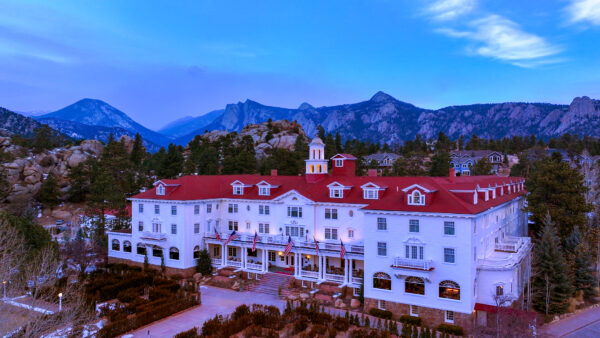
- The Stanley Hotel in Estes Park, Colorado— The iconic, 194-room property—famous as the inspiration for Stephen King’s The Shining—was acquired by the Colorado Educational & Cultural Facilities Authority for $163.24 million from Grand Heritage Hotel Group, LLC. The nonprofit buyer aims to preserve and enhance the hotel’s cultural and educational significance, underscoring the appeal of historically rich, experience-driven assets.
- JW Marriott Phoenix Desert Ridge Resort & Spa—In one of Q3’s largest single-asset deals, Trinity Investments sold this 950-room luxury resort to Ryman Hospitality Properties, Inc. for $865 million. The acquisition aligns with Ryman’s continued focus on destination group and convention resorts with reliable revenue streams.
- Former Holiday Inn Manhattan – Financial District—Hawkins Way Capital purchased this 492-room property from Apollo Global Management for $154.5 million, planning to convert it into a 650-bed student housing facility. The transaction highlights a growing trend of adaptive reuse, as investors seek stable income opportunities beyond traditional hospitality models.
Together, these transactions illustrate the flexibility and value proposition of independents. Investors continue to favor unique properties that can be creatively repositioned or rebranded, offering a path to higher returns even in uncertain performance environments.
Extended Stay’s Resilience
Amid broader market softness, extended-stay hotels remain a standout. They accounted for 18% of all properties sold this quarter—approximately 15,702 rooms—with larger footprints averaging 87 rooms per property versus 81 for traditional hotels. Extended stay also captured 15.9% of verified sales volume, roughly $842 million in total.
Case Study: Institutional Appetite for Extended Stay
Two major transactions defined the quarter’s extended-stay activity and highlighted institutional confidence in the segment:
- Hyatt Regency Orlando—A joint venture between Ares Management and Rida Development acquired the 1,641-room Hyatt Regency Orlando from Hyatt Hotels Corporation for $1.07 billion (or $652,000 per room). Hyatt also provided seller financing for an adjacent parcel slated for a new 2,500-room Grand Hyatt Orlando, signaling long-term optimism in the convention-heavy Orlando market.
- Driftwood Capital Portfolio Recapitalization—Driftwood Capital executed a $1.2 billion recapitalization involving 18 extended-stay hotels totaling 4,203 keys, supported by Wells Fargo and ACORE Capital. This large-scale consolidation reflects growing institutional appetite for steady, income-producing extended-stay assets.
Performance Metrics and Pricing Strength
Notably, economy extended-stay hotels outperformed midscale on a per-room basis this quarter—$72,062 vs. $65,669, respectively. The segment’s appeal lies in dependable occupancy, driven by workforce mobility, project-based business travel, and budget-minded leisure guests. For hotel investors, extended stay continues to offer a rare combination of stability and scalability.
Performance Pressures: RevPAR and Occupancy in Decline
Despite solid transaction volume, operating performance continues to lag. Revenue per available room (RevPAR) declined in 100 of the past 143 days since May, underscoring sustained weakness.
For the week ending September 20, RevPAR fell 1.4% year-over-year, driven by a 0.7-point drop in occupancy and a 0.3% decline in ADR.
Case Study: Market-Specific Weakness
Among the top 25 U.S. markets, RevPAR dropped 2.8%, with sharp declines in key cities:
- New Orleans (-22.4%)—Weakened weekend demand and tough year-over-year comps tied to major events drove the steepest losses.
- Houston (-20.1%)—Continued energy sector volatility and limited business travel weighed heavily on performance.
- Miami and Washington, D.C.—Both saw double-digit declines due to softer weekday occupancy and lower group travel demand.
Overall, occupancy has fallen on 118 of the past 143 days, while ADR growth outpaced inflation just five times. With inflation around 2.7%, this limited pricing power continues to erode profit margins nationwide.
Macro Backdrop: A Cautious Economic Outlook
While the latest GDP revision to 3.8% signals encouraging economic growth, the broader picture is more nuanced. Yes, consumer spending has held up, and unemployment remains historically low—but consumer confidence has fallen to its lowest level since April, revealing deeper uncertainty about the direction of the economy.
This matters for hospitality. Confidence directly affects discretionary spending, including travel, dining, and events—all key revenue drivers for hotels. The question now isn’t just whether the economy will keep expanding, but whether consumers will feel comfortable enough to spend freely again.

Interest rate expectations have also shifted slightly. The 375–400 bps The 375–400 bps range for December is now considered more likely than the previously expected 350–375 bps, suggesting that the Federal Reserve may hold rates steady into early 2026.
In other words, while some data points show momentum, the real test will be whether consumer confidence and hospitality demand follow suit. For now, optimism must be tempered with realism: one positive quarter doesn’t guarantee sustained recovery.
Takeaway for Owners and Investors
This quarter reinforces a critical paradox: a strong economy alongside a sluggish hotel market. For hotel owners, the path forward requires recalibrating expectations. The bid-ask gap between buyers and sellers continues to widen as investors resist pre-pandemic valuations in a cooling RevPAR environment. Those willing to embrace more flexible deal structures or strategic repositioning are better positioned to close transactions and preserve asset value.
Buyers, on the other hand, have an expanding window of opportunity. The independent and extended-stay segments offer the best potential for outsized returns, driven by flexibility, stable demand, and favorable acquisition pricing. Savvy investors who focus on operational efficiency and long-term positioning—rather than short-term rate recovery—will find the most success.
Lenders and institutional capital providers remain cautious but engaged. Underwriting is becoming more data-driven, emphasizing verified performance and forward-looking revenue trends. Operators with proven management capabilities and a clear growth thesis are finding greater access to debt and equity even in a tighter capital market.
Preparing for What’s Next
The U.S. hospitality industry sits at a crossroads. Sales activity and institutional capital interest show encouraging signs, but performance metrics remain under pressure. The next few quarters will reveal whether recent economic momentum translates into renewed consumer spending and improved hotel fundamentals—or if confidence remains too fragile to drive a meaningful rebound.
For now, the industry must balance macro strength with micro caution, positioning strategically in segments—like independents and extended stay—that continue to demonstrate resilience and adaptability.
If you’re an owner, operator, or investor looking to navigate these market dynamics, contact us today. Our advisory team can help identify high-potential opportunities, structure creative financing, and position your portfolio for success in a changing hospitality landscape.