
As the U.S. hospitality industry moves through the holiday season, November’s results reveal a hotel sector walking a fine line between stabilization and stagnation. Performance trends at month end underscore a pattern of limited RevPAR growth, inconsistent occupancy, and consumers showing mixed signals about their financial confidence.
The data from CoStar shows that, despite some bright spots in gateway and event-driven markets, the broader hotel landscape remains soft. The question heading into 2026 is clear: do November’s numbers signal a fragile equilibrium—or an early warning of deeper demand weakness in the year ahead?
In the two weeks ending Nov. 29, RevPAR declined 0.3%, with occupancy down 0.7 percentage points and ADR rising 0.9%. While that modest ADR gain suggests some pricing resilience, growth still lags inflation, meaning margins remain under pressure for hotel operators.
The overall story is one of stagnation—no collapse in demand, but no convincing momentum either.
Since late April, the U.S. hotel sector has seen room demand fall in 21 of the past 31 weeks, with occupancy down in 28 of those weeks. While supply growth has been slow, it continues to offset much of the incremental demand recovery. This imbalance has kept performance metrics stuck in neutral.
In short, demand softness isn’t just a seasonal phenomenon—it’s a structural drag that’s persisted for much of 2026.
Year-over-year comparisons remain distorted by 13 hurricane-affected markets (Helene and Milton). When these are excluded, the national picture looks slightly better: RevPAR up 0.9%, occupancy flat (-0.1 pts), and ADR up 1.1%.
This adjustment shows that, beneath the headline weakness, the underlying fundamentals are slightly more stable than they appear.
CoStar projects November RevPAR to fall roughly 2%, largely due to unfavorable calendar shifts—losing a Friday while gaining a Sunday. December’s outlook is similarly soft. When Christmas Eve and New Year’s Eve land on Wednesdays, as in 2026, both holiday and shoulder-night demand tend to historically underperform.
Among the top 25 hotel markets, only 10 posted positive RevPAR in November. Occupancy declines were more prevalent than ADR erosion, with 19 markets recording negative occupancy YoY, suggesting that fewer travelers, not just lower rates, are driving the slowdown.
Once the industry’s star performer, the Sunbelt region—from Texas to Florida—is now normalizing after years of outperformance. RevPAR losses in Tampa (-28.2%), Atlanta, and Houston highlight that correction.
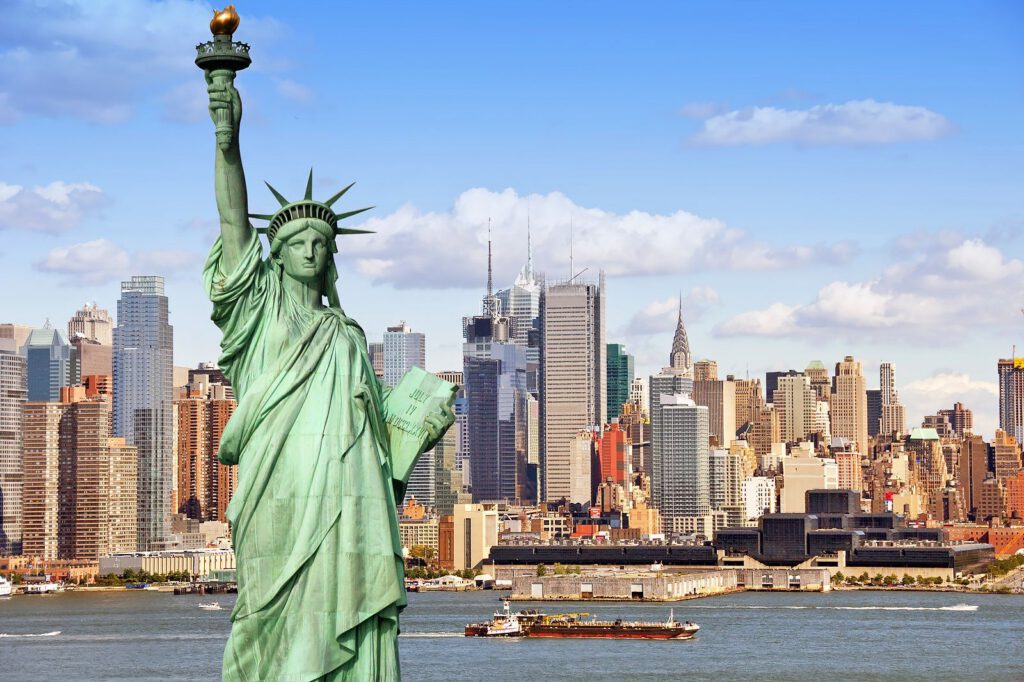
Conversely, gateway cities like New York and San Francisco are stabilizing. San Francisco’s rebound, while notable, is primarily a recovery from exceptionally weak 2021–2024 levels rather than a sign of new long-term strength.
New York City continues to outperform most peers, buoyed by resilient corporate and international segments.
Since 2020, investors have poured into Sunbelt assets, drawn by strong leisure demand. Now, the pendulum is swinging back. Business travel, conferences, and group bookings—typical strengths of urban gateway markets—are reasserting their importance.
This rebalancing signals a more diversified growth pattern heading into 2026, with group and corporate recovery offsetting leisure fatigue.
Two cities—San Francisco (+51.3%) and St. Louis (+35.5%)—stood out in November with dramatic RevPAR surges. These gains were concentrated during Nov. 16–22 but extended into Thanksgiving week, lifting their monthly results well above the national average.
Both markets illustrate the power of large-scale conventions in driving short-term demand spikes.

From Q2 onward, St. Louis RevPAR rose 12.7%, supported by a 5.2-point occupancy gain and 3.2% ADR growth. San Francisco’s RevPAR climbed 13.3%, driven primarily by ADR growth (+7.4%).
Group business remains one of the few sustained demand engines in an otherwise mixed landscape.
Consumers entered Q4 with mixed spending behavior. Inflation-adjusted retail sales fell in September for the first time since May, with weakness concentrated in vehicles, electronics, clothing, and sporting goods.
Higher-income households continued spending, while middle-income consumers began cutting back—a dynamic that helps explain the relative resilience of luxury hotel demand compared with midscale properties.
Despite broad caution, restaurant and bar sales rose 0.7% in September and are up 6.7% YoY, outpacing inflation. That growth provides indirect support for leisure travel and food-and-beverage-driven hotel segments, which continue to rank among the more resilient areas of the hospitality sector.
The early October Prime Day shifted online spending patterns, creating a temporary lull in late-month data. Even so, nonstore retail—a proxy for e-commerce—was still up 6% year-over-year.
This indicates that while the consumer mood is cautious, it hasn’t collapsed. Spending timing—not spending capacity—explains much of the apparent weakness.
With October retail data delayed or incomplete due to the government shutdown, analysts have turned to surveys that show declining sentiment across all income brackets. The picture that emerges: a careful, price-sensitive consumer, not one in retreat.
Japan’s Q3 GDP fell 0.6%, marking its first quarterly decline since early 2024. The weakness reflected lower business investment, sluggish consumption, and falling exports following U.S. tariffs on Japanese goods.
This economic slowdown has direct implications for travel to the U.S.
A weaker yen makes trips to the U.S. significantly more expensive for Japanese tourists. The impact is most visible in Hawaii, but also felt across the mainland.
While the yen explains part of the travel slump, history shows it’s not the only factor—Japanese outbound travel was muted even in prior strong-currency periods.
Post-COVID, Japanese travel to the U.S. remains at historically low levels, far below pre-pandemic norms. The issue appears structural: demographic aging, shifting consumer priorities, and weakened business travel links.
For U.S. destinations dependent on Japan—particularly Hawaii and the West Coast—this remains a significant drag on international recovery.
As 2026 approaches, the U.S. hotel industry faces uneven momentum.
The path forward requires pricing discipline, targeted group sales strategies, and flexibility to adapt to shifting travel patterns. With the right balance of rate management and event targeting, the industry can weather its current softness and position for renewed growth later in 2026.
If you want a market-by-market action plan—or need help refining pricing, group sales, and calendar strategies for the holidays and early 2026—contact us. We’ll translate these trends into a clear playbook tailored to your portfolio and operating goals.