
Slow news cycles often provide the clearest insight. When headlines quiet down, fundamentals and market-level data move to the forefront, making it easier to evaluate longer-term trends without the noise of short-term narratives. For real estate—and hospitality in particular—these periods often reveal more about where momentum is building than weeks dominated by breaking news.
Heading into 2026, pairing broader real estate outlooks with ownership-level market detail helps clarify what’s changing. Capital is reengaging, transaction conditions are gradually improving, and fragmented hotel markets are beginning to surface clearer hotel investment opportunities beneath the surface.
Cohen & Steers, a global investment manager specializing in real assets and listed real estate securities, recently published its 2026 Real Estate Outlook outlining how the next phase of the cycle may take shape. In that outlook, the firm notes that listed real estate has lagged listed equities over the past year, but views 2026 as a potential inflection point on multiple fronts.
Their analysis emphasizes that listed real estate is expected to outperform private real estate, largely because listed vehicles typically have greater exposure to higher-growth property types and benefit from improved liquidity and price transparency. In a more selective capital environment, those attributes can materially influence where capital chooses to reengage.
Cohen & Steers also expects delinquencies to increase as aggressively underwritten deals from the previous cycle mature. However, their key qualifier is just as important: increased real estate transaction volumes should limit a wide impact on the market and overall valuations.
The mechanics behind this are straightforward. When transactions continue to occur—even amid stress—pricing becomes clearer, lenders and buyers can recalibrate expectations, and capital can reallocate rather than remain frozen. Active transaction markets allow assets to reprice incrementally instead of experiencing abrupt valuation resets. In contrast, prolonged inactivity often creates greater uncertainty once deal flow resumes.

For hospitality assets, steady transaction activity helps separate property-specific challenges from broader market risk.
A third theme highlighted by Cohen & Steers is the widening gap between public and private market valuations. Apartments currently show the largest divergence across commercial real estate, which the firm believes may push private-market cap rates higher and values lower.
While this observation is apartment-specific, the broader takeaway applies across real assets. Valuation dispersion forces capital to reassess risk, pricing realism, and relative value—conditions that often accelerate selectivity and reward participants who understand where pricing adjustments are likely to occur.
Colliers, in its recent real estate market outlook commentary, describes the industry as entering a “new equilibrium.” This assessment reflects a broader recalibration across property types, including signs that office demand has bottomed, and that industrial growth is resuming, supported in part by technology and AI-related investment.
Rather than signaling a return to pre-cycle conditions, Colliers’ viewpoints to a market where capital is reengaging under new assumptions—tighter underwriting, clearer return thresholds, and a greater emphasis on asset-level fundamentals.
PwC reinforces this perspective in its latest real estate and capital markets analysis, noting that capital began flowing again in the second half of the year—but selectively. According to PwC, investors are no longer deploying capital broadly across sectors. Instead, they are prioritizing assets and platforms that demonstrate operational durability, liquidity, and a clear path to value creation.
PwC frames the current environment as one where the deal landscape rewards groups that combine data-driven insight with strategic conviction, as liquidity, technology, and consolidation increasingly define competitive advantage in real assets.
Ownership data often reveals what top-line metrics cannot: who is positioned to transact and where fragmentation creates opportunity.
Tampa includes 883 total hotel properties across construction statuses. By scale, independent hotels account for 511 properties, followed by Upper Midscale (138), Upscale (82), Economy (59), Midscale (44), Upper Upscale (43), and Luxury (6).
Extended stay represents a meaningful component of the market, totaling 223 properties and 17,226 rooms. Ownership remains widely distributed, with the largest owner—Blackstone (Extended Stay America)—controlling 13 properties, while multiple groups cluster in the mid-single digits. DHRUV Management, for example, owns eight properties across upper midscale, economy, and independent segments.

Albuquerque consists of 255 total hotel properties, led by Independent (95), Economy (48), and Upper Midscale (44) hotels. Extended stay totals 52 properties and 5,511 rooms.
Ownership is similarly fragmented. The largest owner listed controls 15 properties, while the remainder of the market is dispersed among smaller groups—often a setup that precedes consolidation or repositioning activity.
In both markets, fragmentation—not concentration—is the defining feature. As capital returns selectively, these ownership dynamics often create earlier hotel investment opportunities, particularly for buyers seeking scale and for sellers preparing assets ahead of renewed deal flow.
Hoya Capital data indicates that expectations for two or more rate cuts in 2026 are holding steady at roughly 70%. While timing remains uncertain, consistency in expectations can matter more than precision.
Stable expectations allow buyers and sellers to underwrite transactions with greater confidence. Hoya Capital’s broader market snapshot also shows hotel and lodging real estate posting positive performance alongside a relatively stable Treasury yield environment.
For hospitality assets—especially in upper midscale and independent segments—this combination supports renewed transaction viability as financing conditions become more predictable.
Momentum heading into 2026 is being shaped by a combination of disciplined capital, improving transaction conditions, and clearer pricing signals. Listed real estate positioning, selective capital reentry, and ownership fragmentation in markets like Tampa and Albuquerque are converging to create a more navigable environment for decision-makers.
If you’re evaluating hotel investment opportunities, reassessing hotel valuation, or preparing buying or selling a hotel, now is the time to translate these signals into strategy.
Contact us to discuss how these trends apply to your assets, your markets, and your objectives as the next phase of the hospitality real estate cycle takes shape.

Rachel supports NewGen Advisory’s marketing efforts through the execution of email and social media campaigns, while also monitoring campaign performance and audience engagement to help inform future strategy.
With a background in journalism, audience development and data analysis, Rachel brings a strong editorial and analytical perspective to her role. Her work has been published in The Associated Press, The Washington Post, Business Insider, Bloomberg Government and other outlets. She holds a Bachelor of Arts in Journalism and Public Policy, with an emphasis in law, media and ethics, from the University of Maryland, as well as a Master of Science in Digital Audience Strategy from Arizona State University.
A Phoenix native, Rachel enjoys fiction writing, performing with an improv comedy troupe and spending time with her 11-pound Shih Tzu.

Paul Patel brings more than 30 years of hospitality, entrepreneurial, and corporate leadership experience to NewGen Advisory. His diverse background includes hands-on ownership and operations, finance, business strategy, and sales leadership.
A lifelong Dallas-Fort Worth resident, Paul has owned and operated businesses in the hospitality industry, including restaurants and hotels. He has also worked in the energy procurement sector in Texas, helping hoteliers manage their energy needs and operating costs across Texas and other U.S. markets.
Prior to joining NewGen, Paul held leadership roles with HP, Dell EMC, and McKesson, as well as several startup and entrepreneurial companies. His background spans finance, sales operations, pricing, and business strategy, with experience supporting organizations ranging from emerging businesses to companies generating billions of dollars in annual revenue.
Paul focuses on commercial real estate and hospitality transactions, bringing an owner’s perspective and strong understanding of business fundamentals to each client relationship. He holds a Bachelor of Business Administration in Finance from the University of Texas at Arlington and an MBA from the University of Texas at Tyler.
Paul has also been actively involved in the Dallas community, serving four years on the SLPS Dallas Executive Committee and three years on its Board of Trustees.

Kishan is a Senior Vice President at NewGen Advisory, specializing in complex commercial real estate transactions with a particular focus on hotel-to-alternative-use conversions. When the 2020 economic shift created widespread uncertainty around hotel assets, Kishan helped clients — including non-profit organizations and private investors — convert properties into market-rate apartments, affordable and transitional housing, and behavioral health facilities. His ability to manage a transaction from start to finish, anticipating complexity and driving toward a clean close, has made him a trusted advisor for hoteliers and investors navigating non-traditional exits.
Before joining NewGen Advisory in 2019, Kishan founded and ran a corporate DJ business, an experience that sharpened his entrepreneurial instincts, client relationship skills, and ability to read a room — all of which translate directly into how he approaches deals today.
Outside of work, Kishan enjoys spending time with his family, attending car shows, and taking full advantage of the Arizona sunshine.

Suraj Rama joined NewGen Advisory in 2017 as a Junior Analyst and advanced to Associate Agent in 2022, bringing a background that spans hotel operations, transactions, and legal studies.
Growing up in the hospitality industry gave Suraj a strong foundation in day-to-day hotel operations. He deepened that experience through roles at three IHG properties and legal work alongside attorneys representing brands including Choice Hotels, Four Seasons, and Hilton — a combination that gives him a distinctive ability to analyze assets from both an operational and legal perspective.
Suraj graduated cum laude from Arizona State University’s W.P. Carey School of Business with a degree in Business Law, and is currently completing his Master’s in Legal Studies with a concentration in Business at ASU’s Sandra Day O’Connor College of Law.

Roshan is an Associate at NewGen Advisory, bringing a background in mechanical engineering from the University of North Carolina at Charlotte alongside deep roots in the hospitality industry. Having grown up around hotel operations, he developed an early understanding of the business that now informs his approach to every client engagement.
Before transitioning to brokerage, Roshan held roles in product development and management across several global business lines, where he built strong financial modeling and underwriting skills spanning multiple real estate asset classes — experience he has further deepened through personal investments in commercial and multifamily properties.
Based in Charlotte, NC, Roshan has watched the city evolve from a regional hub into a national destination, giving him a grounded appreciation for market growth and long-term investment potential.
Outside of work, he enjoys soccer, car meet-ups, cooking, and spending time with friends, family, and any body of water he can find.

Jourdyn leads the strategic marketing initiatives for NewGen Advisory, overseeing brand development, market positioning, communications, and business growth efforts across the firm.
With more than a decade of experience in marketing and business development, Jourdyn specializes in building brands, creating demand-generation strategies, developing thought leadership programs, and executing integrated marketing campaigns that drive measurable business results. Her expertise spans digital marketing, public relations, content strategy, events, social media, lead generation, and corporate communications.
At NewGen, Jourdyn is responsible for shaping and executing the firm’s marketing strategy, ensuring consistent brand visibility across all channels while supporting advisors, clients, and strategic initiatives nationwide. She works closely with leadership to develop campaigns, elevate industry presence, strengthen client engagement, and position NewGen as a trusted advisor within the hospitality investment sector.
Jourdyn holds a Bachelor of Arts in Mass Communication and Media Studies from Arizona State University and a Master of Business Administration (MBA) with an emphasis in Marketing from Grand Canyon University.
Most mornings you’ll find Jourdyn in the gym before sunrise and spending time with her husband and children.

Allysia Howerton joined NewGen Advisory in 2026 as a Pipeline & Transaction Assistant, relocating from St. Louis, MO to Arizona to take on the role. She brings a background spanning property management, client services, sales, and administrative leadership, with a track record of managing complex workflows and keeping transactions moving efficiently from inception to close.
Known for her organization, attention to detail, and relationship-driven approach, Allysia supports transaction management, pipeline coordination, and day-to-day brokerage operations — and is passionate about growing her career within the hospitality real estate industry.
Outside of work, she enjoys discovering new coffee shops and restaurants, traveling to experience new cultures, and spending time with her dogs.

2 years
Josie Numedahl joined NewGen Advisory in July 2024 as a Real Estate Assistant (REA). Originally from Iowa, she relocated to Arizona to pursue her education, graduating from Grand Canyon University in 2022 with a Bachelor’s degree in Marketing and Advertising.
Josie began her professional career as a recruiter in the finance and accounting sector, and brings that client-facing, detail-oriented background to her work at NewGen.
Outside of work, she enjoys reading, hiking, exploring local coffee shops, and spending time with friends.
10 years
Anthony is the Staff Accountant for NewGen Worldwide, LLC and its subsidiaries Green Card Fund, LLC and NewGen Advisory, LLC, working directly under CFO Michael Lepore to handle day-to-day accounting functions across all NewGen operations.
Green Card Fund (greencardfund.com) is a USCIS-recognized EB-5 Regional Center authorized to raise foreign capital for domestic development projects. EB-5 investors fund community-need projects and receive an immigration benefit in exchange for job creation. To date, GCF has facilitated over $125 million in foreign direct investment, delivered immigration benefits to more than 250 families, and created over 2,500 jobs in healthcare, education, and hospitality across Arizona and Washington, D.C.
NewGen Advisory (newgenadv.com) is a full-service commercial real estate brokerage specializing in hospitality assets.
Prior to joining NewGen, Anthony completed coursework at Paradise Valley Community College before co-founding a family business that produced custom-wrapped die-cast model cars for corporate clients — handling vehicle customization, display stands, and branded packaging. Serving as Director of Operations, he gained hands-on experience in management, production workflows, and running a business from the ground up.
Outside of work, Anthony is a lifelong ice hockey player with a passion for motorsports — particularly motocross and classic cars. Among his favorites: the 1963 C2 Corvette Sting Ray, the 1965 Shelby Cobra S/C, and the 1971 Plymouth Hemi ‘Cuda. He hopes to one day own and operate a bookkeeping firm serving small businesses.

Nick serves as Director of Operations for NewGen Worldwide, overseeing systems, processes, and cross-entity operations across the firm’s Advisory and Capital divisions. A Minneapolis native, he studied at Denison University and the University of Minnesota before relocating to the greater Phoenix area.
Nick brings over a decade of experience managing high-volume hospitality operations, a background that instilled the precision and process-orientation he applies daily at NewGen. In his current role, he is the administrative backbone of a growing multi-entity organization, keeping its people, platforms, and workflows running in sync.

4 years
Nycole serves as Chief of Staff at NewGen Advisory, where she trains and manages the Real Estate Assistant (REA) team since 2021. She works closely with REAs to ensure agents receive consistent, high-quality support throughout every stage of a deal — from contract to close.
Alongside the Office Manager, Nycole leads onboarding for new agents, REAs, and team members across NewGen Worldwide’s subsidiaries, and has developed a training library to streamline the process for incoming staff. She is also actively involved in evaluating and implementing new platforms to improve agent and REA workflows, while providing leadership with the data needed to monitor KPIs and track revenue goals.
Her background in franchise operations management — spanning startups to scaling franchises — makes her a versatile and valuable member of the NewGen team.
20+ years
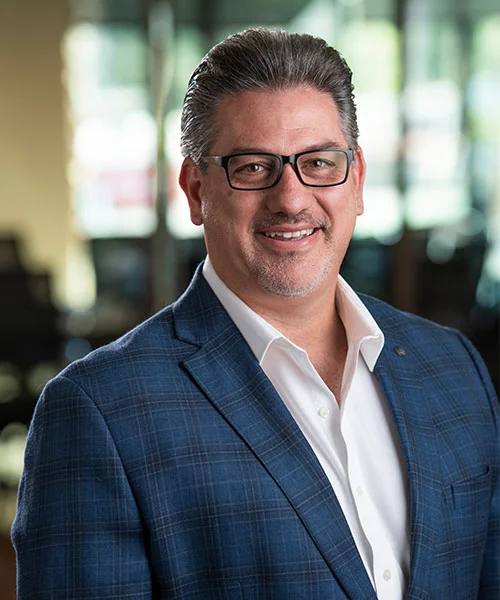
Michael is the Chief Financial Officer of NewGen Worldwide, LLC and its subsidiaries Green Card Fund, LLC and NewGen Advisory, LLC — a diversified real estate investment and capital solutions firm focused on creative, flexible solutions. Michael and his team oversee day-to-day accounting, budgeting, forecasting, and financial modeling across all NewGen operations.
Green Card Fund (greencardfund.com) is a USCIS-recognized EB-5 Regional Center authorized to raise foreign capital for domestic development projects. EB-5 investors fund community-need projects and receive an immigration benefit in exchange for job creation. To date, GCF has facilitated over $125 million in foreign direct investment, delivered immigration benefits to more than 250 families, and created over 2,500 jobs in healthcare, education, and hospitality across Arizona and Washington, D.C.
NewGen Advisory (newgenadv.com) is a full-service commercial real estate brokerage specializing in hospitality assets.
Prior to joining NewGen, Michael built over 20 years of experience in accounting, tax, and operations management serving small to mid-sized businesses. He holds active CPA licenses in both New York and Arizona. His career spans public accounting — including a role as Audit Manager at PricewaterhouseCoopers — as well as private accounting and business ownership, giving him a broad, hands-on command of accounting and management functions. That dual perspective allows him to bring both tax strategy and business strategy to bear when evaluating financial decisions. He is a member of the American Institute of Certified Public Accountants (AICPA) and the Arizona Society of Certified Public Accountants (ASCPA).
A proud Italian-American, Michael lives in Scottsdale with his wife, Patty, and their three children, Alyssa, Anthony, and Joey. Outside of work, he coaches ice hockey and has a passion for cooking Italian food.
15+ years
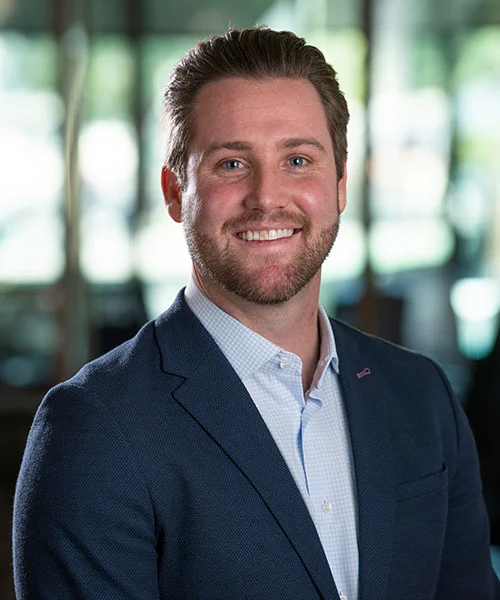
Kyle is a co-founder, Principal, and Chief Executive Officer of NewGen Worldwide, LLC and its subsidiaries Green Card Fund, LLC and NewGen Advisory, LLC — a diversified real estate investment firm focused on creative, flexible solutions. Beyond his broad responsibilities as CEO, Kyle’s primary focus is leading Green Card Fund, developing and implementing capital solutions domestically and internationally, and identifying attractive investment opportunities.
Green Card Fund (greencardfund.com) is a USCIS-recognized EB-5 Regional Center authorized to raise foreign capital for domestic development projects. EB-5 investors fund community-need projects and receive an immigration benefit in exchange for job creation. To date, GCF has facilitated over $125 million in foreign direct investment, delivered immigration benefits to more than 250 families, and created over 2,500 jobs in healthcare, education, and hospitality across Arizona and Washington, D.C.
NewGen Advisory (newgenadv.com) is a full-service commercial real estate brokerage specializing in hospitality assets — a natural evolution of NewGen Worldwide’s business model, built on business partners Girish Patel and Dan Rama’s lifetime experience in the industry. Kyle’s financial acumen and creative approach to structuring deals help NewGen Advisory clients identify and secure profitable opportunities.
Kyle earned a B.A. in Interdisciplinary Studies from Arizona State University with a focus in Business and Urban Planning. He has long been involved with the Greater Phoenix Economic Council’s (GPEC) International Leadership Council, and in 2016 was elected to the Board of Directors of Invest in the USA (IIUSA), the national EB-5 trade association, where he actively contributes to legislative reform efforts and the permanent reauthorization of the EB-5 program.
Kyle splits his time between company offices in Phoenix, AZ and Washington, D.C. Outside of work, he is an avid reader, global traveler, and snowboarder — and after logging over a million miles as a passenger, he has recently taken to the cockpit, learning to fly himself.
40+ years
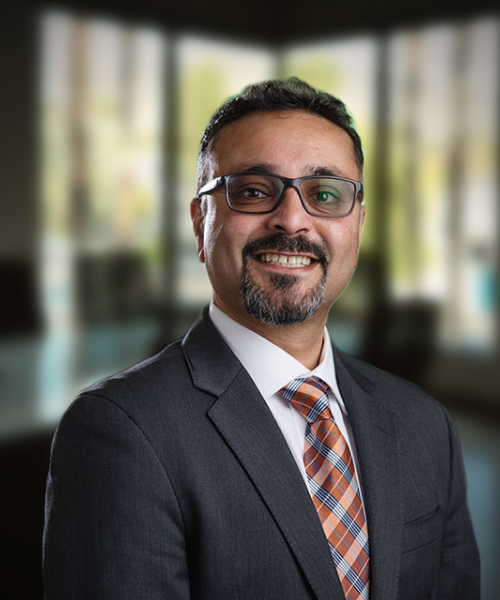
Girish Patel is a co-founder and Principal of NewGen Worldwide, LLC and its subsidiaries Green Card Fund, LLC and NewGen Advisory, LLC — a diversified real estate investment and capital solutions firm focused on creative, flexible solutions across hospitality and healthcare. Among his core responsibilities are leading strategic initiatives, overseeing financial management, and driving real estate investment acquisitions.
Green Card Fund (greencardfund.com) is a USCIS-recognized EB-5 Regional Center authorized to raise foreign capital for domestic development projects. EB-5 investors fund community-need projects and receive an immigration benefit in exchange for job creation. To date, GCF has facilitated over $125 million in foreign direct investment, delivered immigration benefits to more than 250 families, and created over 2,500 jobs in healthcare, education, and hospitality across Arizona and Washington, D.C.
NewGen Advisory (newgenadv.com) is a full-service commercial real estate brokerage specializing in hospitality assets — a natural evolution of NewGen Worldwide’s business model, grounded in Girish’s and business partner Dan Rama’s lifetime experience in the industry. Having grown up in his family’s hotel business as an immigrant, Girish developed a bottom-up understanding of hospitality — mastering operations before becoming an investor, lender, and consultant. That ground-level perspective, tested across multiple economic cycles, underpins his 20+ years as a successful business owner and brings a distinctive depth of insight to NGA’s clients and investors.
Committed to continuous learning and giving back, Girish established the RC Patel Memorial Scholarship for students pursuing careers in real estate investment. He also serves on the Board of Directors of Global Ties Arizona, an organization that strengthens international relationships by making exchange programs more impactful.
40+ years
Dan is a co-founder and Principal of NewGen Worldwide, LLC and its subsidiaries Green Card Fund, LLC and NewGen Advisory, LLC — a diversified real estate investment and capital solutions firm focused on creative, flexible solutions. His primary role is leading NewGen Advisory and serving as its Designated Broker in Arizona.
Green Card Fund (greencardfund.com) is a USCIS-recognized EB-5 Regional Center authorized to raise foreign capital for domestic development projects. EB-5 investors fund community-need projects and receive an immigration benefit in exchange for job creation. To date, GCF has facilitated over $125 million in foreign direct investment, delivered immigration benefits to more than 250 families, and created over 2,500 jobs in healthcare, education, and hospitality across Arizona and Washington, D.C.
NewGen Advisory (newgenadv.com) is a full-service commercial real estate brokerage specializing in hospitality assets — a natural evolution of NewGen Worldwide’s business model, built on Dan’s and business partner Girish Patel’s lifetime experience in the industry. Throughout his career, Dan has been involved in the disposition of over $600 million in hospitality assets, advising clients on acquisitions, mergers, and divestitures across the United States.
Dan began his career as a hotel operator and owner in 1994 following his studies at the University of Arizona, going on to build a portfolio as a franchisee of Red Brick Pizza, Holiday Inn, Ramada Inn, and Comfort Suites. He holds General Manager Certifications from Holiday Inn, Motel 6, and Days Inn, and is a Certified Hotel Owner (CHO) with a Certification for Hotel Industry Analytics (CHIA).
Beyond his company responsibilities, Dan is an active industry voice. He serves as an Ambassador with the Asian American Hotel Owners Association (AAHOA) — the largest hospitality owners association in the U.S. — and previously served as its Southwest Regional Director. He also sits on the Board of Directors of the Arizona Lodging and Tourism Association (AZLTA).
Dan lives in Gilbert, AZ with his wife, Chetna, their son Suraj, and their daughter Sonya. Outside of work, he enjoys golf and cheering on the Denver Broncos.
40+ years
Suraj is the Chief Legal Officer of NewGen Worldwide, LLC and a member of its senior leadership team, where he contributes to the operational management and strategic planning of the company and its subsidiaries — including Green Card Fund and NewGen Advisory. NewGen Worldwide is a diversified firm engaged in real estate investments, creative capital solutions, and advisory services for the entrepreneurial investor.
Suraj first served as outside counsel for Green Card Fund and NewGen Worldwide from 2008 to 2014 before joining the organization as Chief Legal Officer. In this role, he leads the company’s legal, regulatory, and corporate governance functions, with responsibility spanning real estate, risk management, contractual relations, and investment strategies. He also oversees the business administration of NewGen Advisory, a full-service commercial real estate brokerage specializing in hospitality assets.
Prior to joining NewGen, Suraj was Managing Partner of Bhakta & Associates, PLLC, a full-service business law firm where he represented a broad range of clients across acquisitions and sales, corporate structuring, contracts, franchise law, development and construction, and equity and debt financing.
A native of Ohio, Suraj graduated from The Ohio State University in 1999 with a B.S. in Business Administration and earned his J.D. from Case Western Reserve University in 2002. He resides in Peoria, AZ with his wife, Neena, and their two sons, Shiv and Soham.