
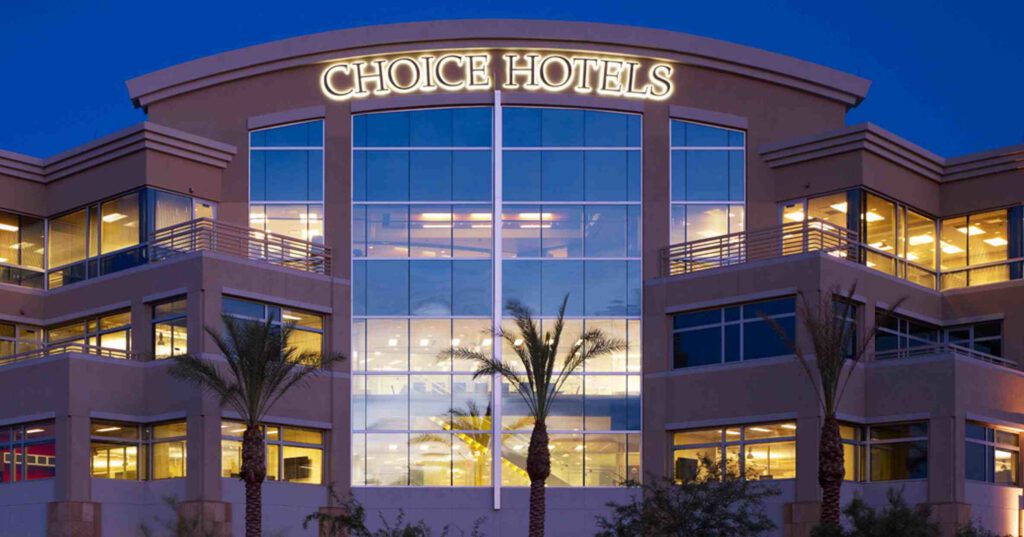
The U.S. hotel industry stands at a crossroads. On one hand, operators like Choice Hotels are posting strong financial performance, with Q2 EBITDA beating expectations. On the other hand, their 2025 outlook remains muted, projecting revenue per available room (RevPAR) growth between -3% and 0%.
For hotel investors and hotel brokers, that guidance is a red flag. Growth headwinds—ranging from higher construction and financing costs to uneven consumer demand—are clouding the future. With traditional pipelines slowing, the question is clear: where can developers and investors still find growth opportunities in hospitality?
Not all hotel segments are suffering equally.
The message is clear: the hotel market is bifurcating. Higher-end properties are managing through the turbulence, while lower-end scales are struggling to maintain momentum.
This uneven performance is reflected in the development pipeline. According to recent data, hotel construction has slowed in 8 of 9 U.S. regions.
Why the pullback? Financing costs are a primary culprit. Hotel mortgage rates remain elevated at around 6.5% or higher, making it harder for projects to pencil out.
Take the example of a hotel for sale or under development, like the SpringHill Suites in Lakewood, Washington. The project requires a 6.8% cap rate just to break even, a difficult hurdle in today’s market. Even in strong-performing submarkets, the math doesn’t always justify breaking ground.
For many developers, this means projects are either delayed, restructured, or canceled outright.
Against this backdrop, one segment is shining: extended stay.
Demand for extended-stay accommodations is estimated to be twice the available supply, making it one of the most attractive plays in the industry. Developers are following the trend—in some regions, nearly 90% of motels for sale or economy hotels under construction are extended-stay properties.
Choice Hotels is betting big on this segment with its $500 million joint venture with High Side Companies. The deal supports its Ever home Suites brand, which already has four properties open and about 65 more in the pipeline.
Why extended stay works so well:
In other words, extended stay isn’t just a defensive play—it’s become the growth engine of hospitality development.
For investors, the lesson is clear: extended stay is where the growth is.
But this doesn’t mean traditional hotels have no role to play. Creative strategies can still unlock value, particularly in adaptive reuse. For example:
For owners and developers navigating today’s headwinds, several strategies stand out:
The U.S. hotel industry is entering 2025 with slower growth, tighter financing, and uneven demand. For traditional hotel development, this means caution and recalibration.
But amid the uncertainty, extended stay has emerged as the clear bright spot. With demand far outpacing supply, lower costs, and more resilient occupancy patterns, the segment isn’t just surviving—it’s leading the industry forward.
In a market full of headwinds, extended stay represents the clearest path to growth for both investors and developers. If you’d like to explore extended stay opportunities, discuss market strategies, or evaluate adaptive reuse projects, contact us today to learn how we can help you navigate this pivotal moment in hospitality.