
The hotel industry wrapped up another earnings week with cautious optimism—and a dose of reality. Most operators reported results ahead of expectations, but the tone from management teams remained measured. RevPAR is growing, but at a pace that barely outpaces inflation, and operating expenses continue to put pressure on margins.
Two themes stood out clearly: credit card partnerships are emerging as significant fee drivers heading into 2027, and investors are sharpening their focus on the quality of unit growth, particularly after Marriott’s high-profile termination of its partnership with Sonder. Both trends reflect a sector that is leaning more heavily on predictable fee revenue and disciplined growth rather than headline expansion.
This quarter’s updates landed in a travel environment that is still fundamentally healthy but undergoing a clear deceleration. Demand has remained broadly stable, yet rate growth has softened, and cost lines continue to rise. Against this backdrop, large global brands with diversified fee structures are performing well, while smaller chains and hotel REITs are working harder to maintain margin integrity.
Marriott’s third-quarter performance was strong, with franchise and incentive management fees outperforming expectations. Adjusted EBITDA grew roughly 10% year-over-year and came in ahead of investor forecasts. The company reiterated that 2026 should be a “normal,” steady growth year, with RevPAR projected to rise between 1.5% and 2.5%.
The 2026 World Cup should provide an incremental lift—about 30–35 basis points globally and 50 basis points in the U.S. and Canada. But the real discussion point was Marriott’s co-branded credit card renewal. The company anticipates $100–$250 million in incremental 2027 earnings, providing meaningful visibility in a moderate RevPAR environment.
This clarity on fee growth, paired with Marriott’s scale and stability, reaffirmed investor confidence heading into next year.
Hyatt delivered another steady quarter, with results slightly ahead of expectations thanks to lower G&A expenses and stronger Playa contributions. Systemwide RevPAR rose 0.3%, while U.S. RevPAR dipped 1.6%.
The more significant news was Hyatt’s renewal of its Chase co-branded credit card agreement, which is expected to generate $55 million in additional 2027 earnings. Combined with a sustained focus on expanding conversions and asset-light initiatives, Hyatt continues to reshape its business model into one focused on recurring, capital-efficient earnings streams.
Choice Hotels managed to outperform EBITDA expectations even with U.S. RevPAR declining 3.2%. Global RevPAR rose thanks to nearly 10% growth overseas, but domestic weakness remains a headwind.
Looking ahead to 2025, the company now expects RevPAR to fall between 3% and 2%—a sobering figure given rising franchise competition from larger brands pushing further into midscale.
Choice’s outlook reflects a broader reality: economy and midscale operators are facing structural constraints that cannot be solved simply with new brands or modest cost cuts. Capital access, conversion momentum, and distribution efficiencies all favor larger competitors.
Hotel REITs offer a vivid snapshot of a divided market. DiamondRock Hospitality delivered one of the strongest updates, driven by short-term group pickup and resilient out-of-room spending. Margins largely held, and management expressed confidence heading into 2026.
Host Hotels & Resorts, supported by its high-end positioning, also exceeded expectations and raised full-year guidance. Markets like Maui, New York, and San Francisco outperformed, reinforcing the theme that luxury and upper-upscale segments continue to lead the recovery.
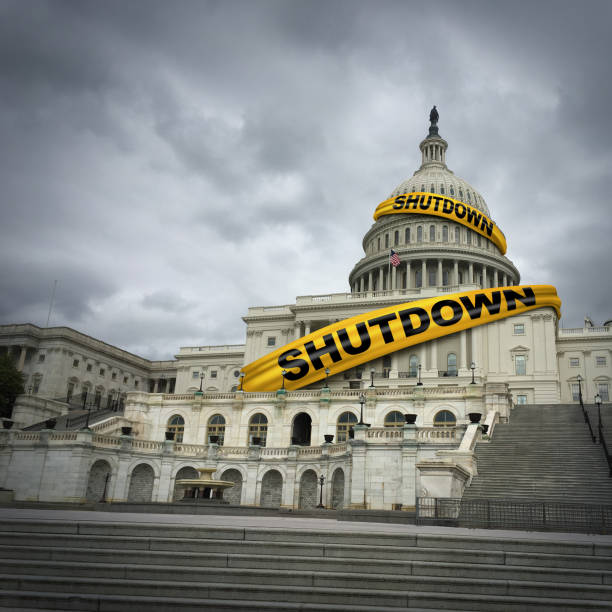
Meanwhile, Pebblebrook and Sunstone reported mixed results as the government shutdown dampened select markets. Pebblebrook adjusted its outlook accordingly, while Sunstone held its guidance but noted persistent margin pressure.
On the more challenging end, RLJ and Summit continued to struggle with negative RevPAR, weaker government demand, and ongoing expense pressure. Summit’s asset sales helped reduce leverage, but visibility remains limited.
Apple Hospitality stood out among mid-tier REITs, beating margin expectations and maintaining cost discipline even as RevPAR guidance was revised downward. Notably, Apple moved forward with multiple fixed-price development projects in Anchorage and Las Vegas, reflecting a long-term conviction in its select-service strategy.
The industry watched closely as Pebblebrook prepared to sell the Westin Michigan Avenue Chicago for $72 million—a property purchased for $215 million in 2006. Nearly two decades of RevPAR growth and routine capex couldn’t offset the long-term erosion in value brought on by shifting urban demand patterns, elevated operating costs, and a changing franchise landscape.
The lesson is straightforward: timing and market selection matter as much as operational performance. Even trophy assets are not immune to secular shifts.
Marriott’s termination of its licensing agreement with Sonder—effective immediately—was one of the most important developments of the week. Roughly 7,700 rooms across 142 properties exited the system, reducing Marriott’s projected 2025 net unit growth to “approach 4.5%” rather than the previously expected 5%.
To understand the implications, it’s important to remember what Sonder was and why Marriott brought it into the ecosystem in the first place.
Sonder operated an asset-light, tech-enabled hybrid model—somewhere between a boutique hotel and short-term rental—typically leasing whole floors or buildings, furnishing them to a modern aesthetic, and offering hotel-like operations with limited staffing. Its inventory spanned major urban markets such as New York, Los Angeles, Chicago, Miami, Seattle, London, and Dubai. The idea was simple: convert underutilized apartment or hotel properties into stylish, standardized accommodations for younger leisure and business travelers.
Marriott’s intention in partnering with Sonder was to expand its reach into “apartment-style stays”—a segment growing faster than traditional hotels—and fold this inventory into the Bonvoy ecosystem. With platforms like Airbnb accelerating, Marriott saw Sonder provide design-forward, extended-stay alternatives without owning or developing these properties directly.
Sonder’s business model requires massive upfront capital and long-term lease obligations. With more than $1 billion in operating lease liabilities, recurring negative free cash flow, and repeated restructuring efforts, the company’s financial strain proved incompatible with Marriott’s push for reliable, high-quality unit growth.
The fallout has minimal financial impact for Marriott—around $10–$15 million in annual earnings—but carries significant symbolic weight. Investors now want profitable, durable, and brand-consistent unit additions—not volume for its own sake.
Amid the varied hotel results, Airbnb delivered another strong quarter. Revenue hit $4.1 billion (+10% FX-neutral); ADRs rose to $171, and nights booked reached 133.6 million. The company guided Q4 revenue to $2.66–$2.72 billion, signaling continued momentum.

More importantly, Airbnb’s product roadmap—hotel bookings, loyalty, enhanced services, advertising, and AI-driven search—positions it as a broad hospitality platform rather than a listings marketplace. This ecosystem approach differentiates Airbnb from traditional lodging brands and gives it multiple monetization pathways without requiring heavy capital investment.
As the industry moves toward 2026, expectations center on modest RevPAR gains, persistent expense pressure, and a growing reliance on predictable fee streams—particularly from the credit card renewals set to bolster earnings in 2027. High-end operators with strong balance sheets and diversified revenue models remain best positioned to navigate the next phase of the cycle.
For developers and investors, the message is clear: sustainable growth comes from disciplined underwriting, strategic asset selection, and partnerships that can withstand shifts in demand. The Sonder fallout reinforces a simple truth—branding alone cannot compensate for financial instability.
If your firm is evaluating acquisitions, refining its investment strategy, or reassessing market exposure heading into 2026, now is the right moment to make informed moves. Contact our team to identify opportunities, analyze emerging trends, and position your portfolio for the next stage of hospitality growth.